
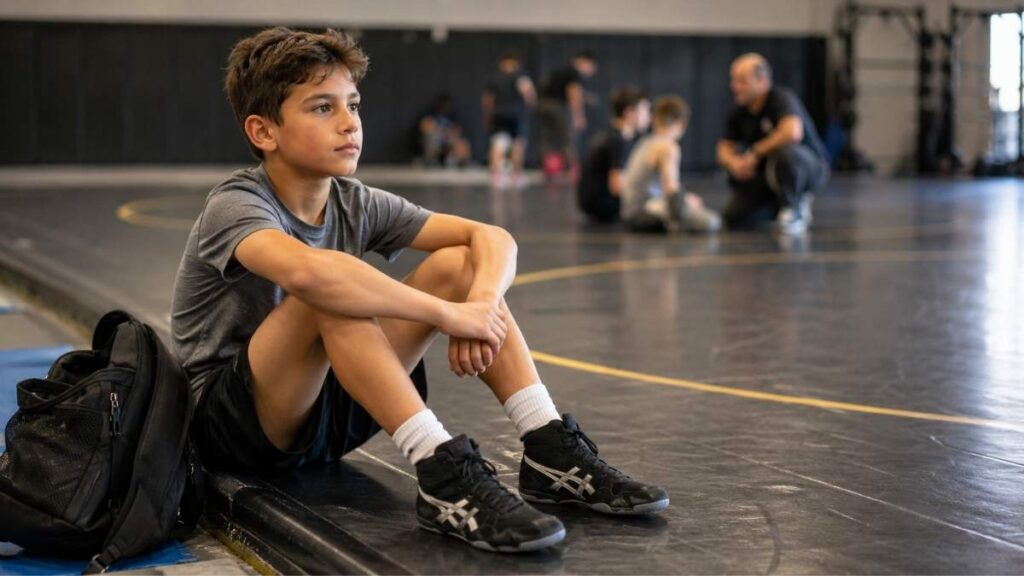
When people think about wrestling, they often picture takedowns, medals, championships, and intense competition. They see the physical side of the sport: the sweat, strength, conditioning, and toughness.
But ask any experienced wrestler, coach, or parent, and they will tell you that wrestling is about much more than what happens during a match.
Wrestling is one of the most powerful character-building sports available to young athletes. Every practice, match, victory, and defeat offers lessons that extend far beyond athletics.
Long after the singlet is packed away for the final time, the qualities developed through wrestling can continue shaping a young person’s education, career, relationships, and everyday life.
Here are some of the most valuable life lessons wrestling teaches.
1. Resilience: Learning to Get Back Up
One of the first lessons every wrestler learns is that failure is not the end.
Unlike many team sports, there is nowhere to hide on a wrestling mat. When a wrestler loses, the result belongs to them. There are no teammates to blame and few excuses to lean on.
That can be difficult, especially for a young athlete.
Wrestling also teaches an important lesson: losing is not permanent.
After a loss, wrestlers learn to:
- Ask questions
- Review what went wrong
- Return to practice
- Improve their technique
- Prepare for the next opportunity
Over time, they begin to understand that setbacks are not signs that they should give up. They are opportunities to learn and grow.
Life works the same way. Plans fall apart, relationships change, jobs are lost, and goals sometimes take longer than expected.
The people who succeed are not necessarily the ones who never fall. They are the ones who continue getting back up.
Wrestling teaches children that resilience is not about avoiding hardship. It is about refusing to let hardship define them.
2. Responsibility: Owning Your Results
Few sports teach personal accountability as clearly as wrestling.
If an athlete skips practice, it often shows.
If they do not work on their conditioning, it shows.
If they ignore their coach’s instructions, it shows.
Preparation directly affects performance.
This level of ownership helps young wrestlers develop responsibility. Instead of automatically making excuses, they learn to ask better questions:
- What could I have done differently?
- What do I need to improve?
- How can I prepare better next time?
- What can I control moving forward?
These habits carry into adulthood.
Responsible students prepare for exams. Responsible employees accept feedback. Responsible parents and community members show up consistently.
Responsibility is not simply about accepting blame. It is about understanding that our choices help shape our results.
3. Work Ethic: Understanding That There Are No Shortcuts
Wrestling has a way of exposing shortcuts.
An athlete cannot fake conditioning. They cannot talk their way into better technique or pretend to be stronger than they are.
The mat often reveals how well someone prepared.
Progress comes through:
- Repetition
- Consistent attendance
- Difficult practices
- Extra drilling
- Strength and conditioning
- Listening to coaches
- Showing up even when motivation is low
Eventually, wrestlers learn a powerful lesson: hard work works.
Whether someone wants to become a teacher, firefighter, doctor, business owner, coach, or skilled tradesperson, the basic formula remains similar.
Consistent effort often beats talent that refuses to work.
Wrestling teaches kids that extraordinary results usually come from ordinary habits repeated consistently.
4. Discipline: Doing What Needs to Be Done
Motivation comes and goes. Discipline stays.
Every wrestler has days when they do not feel like running, drilling, lifting, or competing. Wrestling teaches them how to continue working even when they do not feel completely motivated.
That ability is one of the greatest gifts the sport can provide.
Discipline teaches young athletes that feelings do not always have to determine their actions.
They learn:
- You can be nervous and still compete.
- You can be tired and still finish practice.
- You can be frustrated and still listen.
- You can make a mistake and continue improving.
- You can feel uncomfortable and still move forward.
In adulthood, discipline becomes even more valuable. Successful people do not always feel motivated to study, exercise, work, manage responsibilities, or care for their families.
They learn to do what needs to be done.
Wrestling begins building that mindset at a young age.
5. Confidence: Earned, Not Given
Real confidence does not come only from compliments. It comes from preparation and experience.
Confidence grows through:
- Completing difficult practices
- Facing challenging opponents
- Correcting mistakes
- Learning new techniques
- Reaching personal goals
- Doing something that once felt impossible
Wrestlers slowly develop a quiet confidence because they have seen what they are capable of overcoming.
Confidence built through effort is more durable than confidence based only on praise. It does not disappear after one difficult performance because it is rooted in experience.
Young wrestlers begin telling themselves:
- I have done hard things before.
- I can handle this challenge.
- I can keep learning.
- I will find a way forward.
That belief can carry into classrooms, job interviews, public speaking, leadership positions, and everyday challenges.
6. Mental Toughness: Staying Calm Under Pressure
Every wrestler experiences pressure.
They walk alone to the center of the mat. They compete in front of coaches, teammates, friends, and family. They must make decisions while tired, nervous, or uncomfortable.
Over time, wrestlers become more comfortable being uncomfortable.
They learn how to:
- Manage nerves
- Stay focused
- Listen under pressure
- Control their breathing
- Respond instead of panic
- Continue working when tired
Life constantly presents pressure through exams, job interviews, financial challenges, emergencies, parenting, and difficult decisions.
Former wrestlers may eventually realize that they have been practicing how to handle pressure for years.
The environment changes, but the skill remains.
7. Respect: Understanding That Every Opponent Has Value
Respect is an essential part of wrestling.
Before a match, competitors shake hands. After the match, they shake hands again. Win or lose, respect should come first.
Wrestlers learn that every opponent contributes to their development. The most challenging competitors often become their greatest teachers because they reveal weaknesses and areas that need improvement.
This creates humility.
There will always be someone who is:
- Stronger
- Faster
- More experienced
- Better prepared
- More technically advanced
Instead of fearing those people, wrestlers can learn to appreciate the opportunity to compete against them.
At Ukiah Wrestling Club, athletes are encouraged to show respect for their teammates, opponents, coaches, officials, families, and the sport itself.
Respect developed through wrestling can strengthen friendships, workplaces, teams, and communities.
8. Delayed Gratification: Recognizing That Success Takes Time
Modern culture often celebrates instant results. Wrestling teaches the opposite.
Improvement does not happen overnight.
Technique can take months to develop. Strength and conditioning take consistent effort. Championships are built through countless practices that most people never see.
Young wrestlers begin to understand that meaningful accomplishments require patience.
This mindset can benefit many areas of life, including:
- Saving money
- Completing an education
- Building a career
- Developing a skill
- Growing a business
- Maintaining healthy relationships
- Reaching long-term goals
The biggest rewards rarely happen immediately.
Wrestlers become more comfortable investing effort today for results that may come much later.
9. Character: Doing the Right Thing When No One Is Watching
Perhaps the greatest lesson wrestling teaches is not about competition at all. It is about character.
Character is:
- Finishing the final sprint even when the coach is not watching
- Helping a teammate improve
- Shaking hands after a difficult loss
- Showing respect to officials
- Admitting a mistake
- Giving full effort during practice
- Doing the right thing without expecting recognition
These small decisions build integrity over time.
Eventually, wrestling becomes more than something children do. The lessons become part of who they are.
The Greatest Victory
Parents often ask coaches whether their child has the potential to become a champion.
A more important question may be:
What kind of person will wrestling help them become?
Not every wrestler will win a state championship.
Not every wrestler will compete in college.
Not every wrestler will stand at the top of a podium.
But every wrestler has the opportunity to leave the sport stronger than when they entered it:
- Stronger in character
- Stronger in confidence
- Stronger in resilience
- Stronger in discipline
- Stronger in responsibility
Long after medals collect dust and scorebooks are forgotten, these qualities remain.
Years from now, former wrestlers may not remember every match they won or lost. They may remember learning how to continue when things became difficult.
They may remember earning success instead of expecting it.
They may remember discovering that courage does not mean being free from fear. It means moving forward despite it.
That is why wrestling is far more than a sport.
It is a classroom without desks, a teacher without lectures, and a place where young athletes can develop into capable adults.
In the end, the greatest thing wrestling builds is not champions.
It is character.